This Unlikely Sonic Map of Oil: In Conversation with Sanaz Sohrabi
All images: Sanaz Sohrabi, An Incomplete Calendar, 2026, film still. Courtesy of the artist.
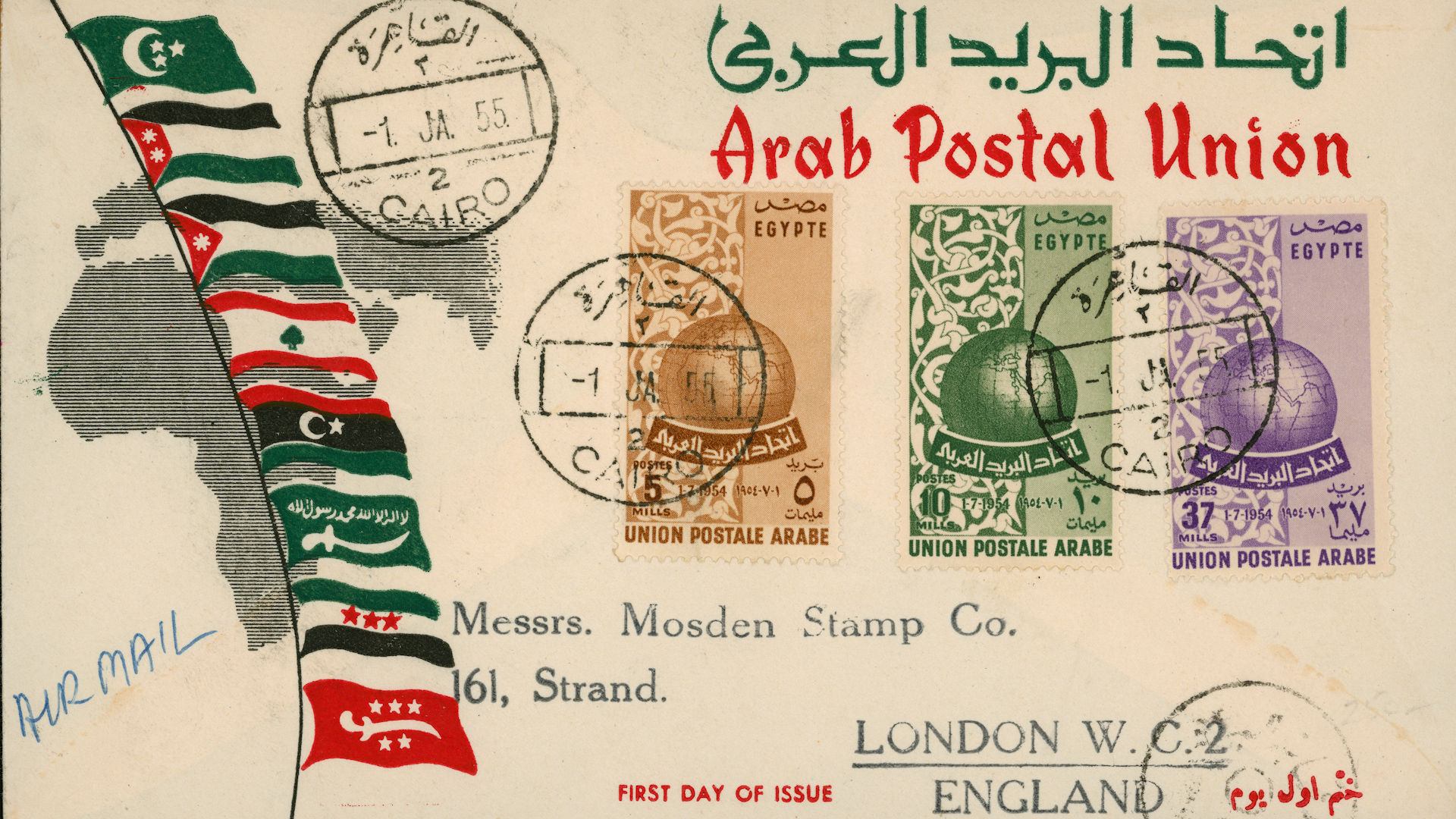
In An Incomplete Calendar, Montreal based artist Sanaz Sohrabi investigates the early evolution and unfolding of the Organization of Oil Exporting Countries (OPEC). The film is anchored by a peculiar musical album entitled Rhymes and Songs for OPEC. Recorded in 1980—OPEC’s 20th anniversary—by the Concert Choir of the Central University of Venezuela, the album consists of traditional folk songs from the various nation states that made up OPEC at the time, a gesture of furthering solidarity amongst members. Sohrabi’s investigations unravel the fragility of transnationalism as OPEC sought to create Pan-Arab solidarity through shared nationalist desires to eliminate foreign control and investment in oil, foregrounding member states’ competing agendas—something that was often exacerbated by differing approaches to allyship with Palestine.The visualization of such control became an important tool, as evidenced through the imagery found on stamps in the 1950s and 60s, when OPEC nations used oil towers, tankers and pipelines as recurring branding motifs. As Sohrabi reveals, Rhymes and Songs for OPEC reflected a vast and fraught community, part of the Third World Project, built on the control of oil, the channelling of its revenues and the relationship between sounds and images.
An Incomplete Calendar, which is the focus of this interview and is the artists’ first feature length film, is the culminating work in Sohrabi’s film trilogy that takes an in-depth look at oil and its myriad manifestations as an earthly substance, a commodity, and a troubled global protagonist forced to flow between the violence of imperialist desires, nationalist agendas and transnational solidarity. In the trilogy’s first two films, One Image, Two Acts (2020) and Scenes of Extraction (2023), Sohrabi deftly sifts through BP Oil’s photo archives to poetically examine the intertwined ways that the image of oil was visualized, narrated and controlled. In the former, the artist compares BP’s settler colonial imagery to that of Iranian new-wave filmmakers. In the latter, she foregrounds the role that camera technology played in producing not only ethnographic surveys of people and land, but in its use and evolution as a tool for destructive oil exploration and fracking technologies. By examining these multifaceted conflicting and parallel identities of technology and oil, Sohrabi hones in on its visualization, asking: “what might a complete image of oil look like?”

A trailer for An Incomplete Calendar can be viewed here.
—
Heather Canlas-Rigg • How did you come across the album, Rhymes and Songs for OPEC, and how did researching sound and song affect your approach to the film?
Sanaz Sohrabi • It was by accident. I came across Rhymes and Songs for OPEC in 2018 when I encountered the vinyl on e-Bay. One might first think of a record shop, a second-hand market, or some antique shop, and e-Bay is perhaps not the place one assumes to find a record like this. I was struck by the improbability of a Spanish-speaking concert choir from the Central University of Venezuela phonetically singing folk songs in Farsi, Arabic dialects, and Yoruba. Though musically precise, the songs were not fully intelligible to native speakers, including myself. This unlikely sonic map of oil became a guiding thread for An Incomplete Calendar, where I explored language, translation, and music as sites of translational solidarity. This musical history opened up a new avenue to look at an unlikely connection between the role of radio and songs in liberation movements between 1960-70.
H • What does “calendar” mean to you?
S • I look at it not in a linear sense, but as a temporal structure for shaping memory politics and what we tend to remember, commemorate, celebrate and forget. Each calendar is a temporal cycle through which I could bring together geographies that do not necessarily connect and have a new reading of events and political actors, often either not considered to be part of the canonical history or never read in relation to one another.
H • The film opens by pointing to the year 1980, when Rhymes and Songs for OPEC was recorded, and then looks at the socio-political context that led to the formation of OPEC, including the first Arab Petroleum Conference in 1959, and prior to this, the former Iranian Prime Minister’s visit to Cairo in 1951. You take viewers through the following decades ending around the time of the Iran-Iraq War which began the same year Rhymes and Songs was recorded. I really got a sense of cyclical time over linearity in the way the film unfolds, perhaps because of your sequencing, interviews and narration, among other things, but also because of our current moment, which mirrors many of OPEC’s tensions and incommensurabilities. Can you share about your approach to time when creating this film, and how our current moment affected the final edit?
S • As I mentioned above, the temporal imaginary of what a calendar does, such as organizing, erasing and remembering was about thinking non-linearly and in parallels. It was hard not to see the dates, years, cities and countries marked on the stamps, letters and magazines. There was an indexical quality to the materials that inevitably brought forward to the film the idea of assembling a timeline that is inherently incomplete. I was not interested in telling an origin story of OPEC, that was neither my interest nor my expertise, but it was about how this tricontinental economic alliance could be seen from another dimension, only if we shift our political calendar and connect it to other alliances, Non-Aligned Movement, Arab League, etc., etc.
H • Throughout An Incomplete Calendar you mention ghosts a number of times. Ghosts linger, haunt, remain, return.
S • Every archive story is a ghost story. In Scenes of Extraction, I actually open the film with the lingering ghosts alongside the infrastructure, and often interrogate what is in the shadows of the image. In An Incomplete Calendar, I also mention how the oil pool in the Tehran Museum of Contemporary Art holds the ghosts of other stories. It was clear to me from the beginning that the film is going to bring together different characters, places and ghosts that are dwelling different political calendars. In the past year, I curated a film screening series along with my colleague Farah Atoui at la Lumiere collective in Montréal. One of our programs was titled “Ghosts and Songs,” in which we directly programmed films that focused on songs and rituals, and “hauntology” as a creative method. Hauntology proposes that we are always haunted by what came before—by unresolved histories, by the voices of the dead, by futures that were imagined but never realized. The musical record, its songs, and idea about drawing an alternative geography of oil through music was about such imagined but unrealized dreams, and it became an ode to this imagined world that could be conjured up by listening to the musical vinyl again.
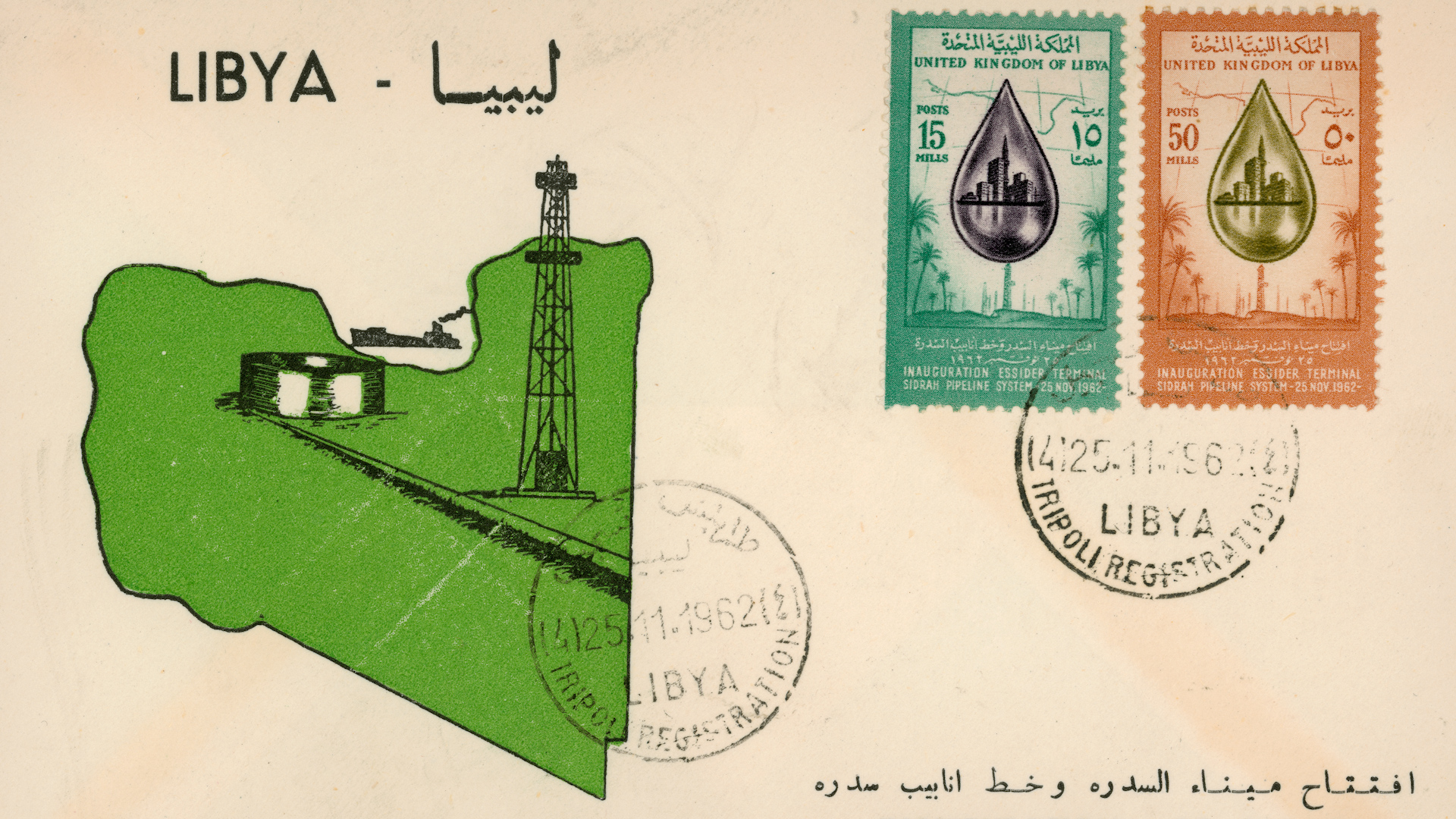
H • OPEC member nation states forged together through their desires and successes in countering Western imperialism, in newfound independence, and gaining national control of their oil production, exports and revenues. As you share through your investigation into stamps and letters from the time, the visualization of oil towers, tankers and pipelines on stamps, became an important national branding tool for OPEC members, as a visual signal of sovereignty over this important resource. It’s interesting that you compare this mode of visualization, that circulated through the postal system, to the televised meetings OPEC held, showing who was at the table for these conversations, and importantly, who wasn’t. In thinking more about ghostly lingerings and returns, how do you feel these visuals speak to the events of today?
S • Like the Non-Aligned meetings and summits, the OPEC meetings were also a media event. The oil ministers and the national elite were highly aware of their media image—how they enter the conference room and how they are photographed. We see the presence of the cameras, and the table of negotiations as a form of staging for a new image of the Third World to emerge. Similarly, these “tables” became very iconic and tended to dominate other forms of political engagement that occurred in the street, by labor unions, political activists, and other forms of anti-imperialists that were occupying this heightened media-escape. In An Incomplete Calendar, I wanted to specially build that contrast, between what occurred out on the street and what decisions were made around the official tables.
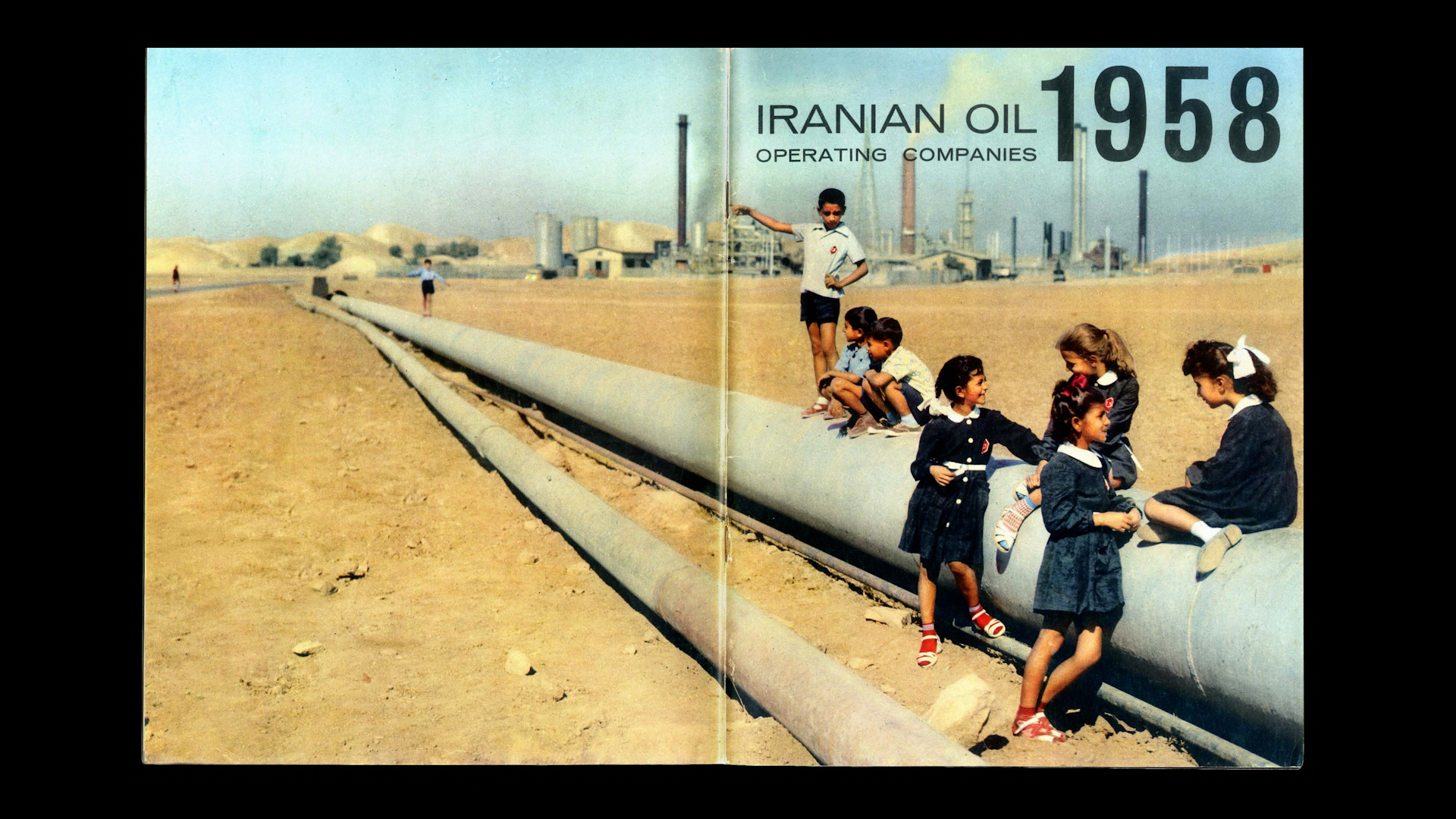
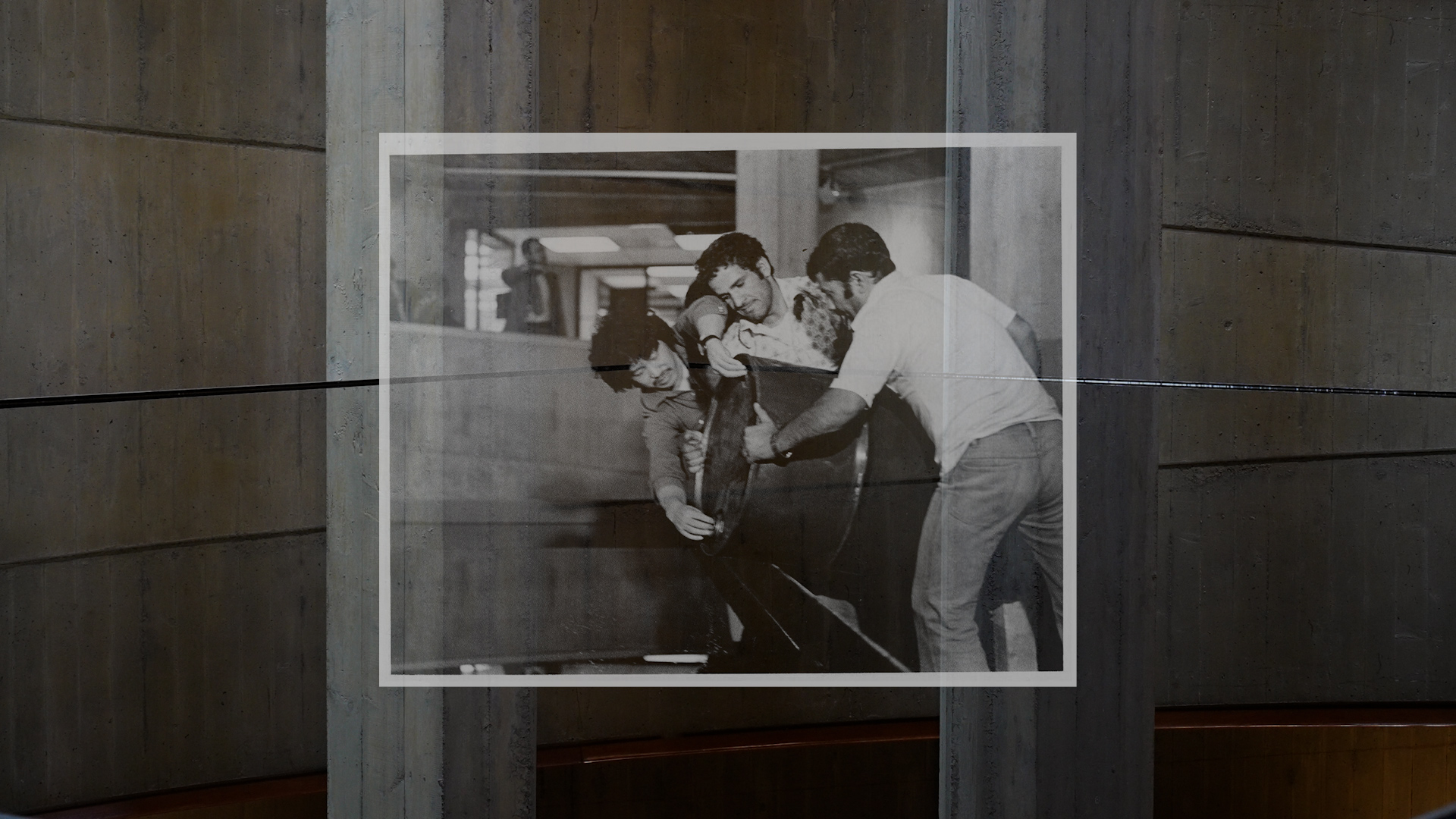
H • I am still thinking about the long, oblong mirror that is shown in the film—once outside, and once inside of Caracas’ Aula Magna auditorium, at the Universidad Central de Venezuela where, as you share, American artist Alexander Calder’s Floating Clouds (1955) acoustic ceiling is installed and where Rhymes and Songs for OPEC was recorded. Both times that the mirror comes into view (which, I believe, is held by you) a specific sound is heard, as if a tuning fork, or perhaps a small gong, is being hit, and the reverberating note unfolds. Can you talk about this visual and sonic pairing?
S • My production team made that mirror in Caracas. Its shape is alluding to an Alexander Calder’s mobile outlines. I had multiple ideas for that reflective gesture and visual intervention. One alluding to the reflection of the oil pool in Tehran Museum of Contemporary Art (TMoCA), and the other one animating the space in Aula Magna, (and you are right, I am the one holding it). I was treating the mirror as a character, a ghostly and ambiguous figure that could be interpreted differently and does not have a fixed characterization per se. It could embody both sonic and spatial interventions, either in the performance or how we created the sound design for the film. In the sound treatment of the mirror pieces, there is a piercing quality, almost a sonic scanning of the space. Overall, all the visual and sonic elements in the film have a form-content relationship and we can see them recur throughout the film.
H • Your film takes us to TMoCA where you ask: “How does an oil nation feel and see the wealth of oil?” While a vast amount of OPEC funds were spent on militaristic equipment and infrastructure, it was also used for visual arts and culture, as evidenced in the museum built in Iran’s capital, for example. You trace American artist Alexander Calder’s work from TMoCA to Venezuela, where, as we shared above, he was commissioned to create the acoustic ceiling in the Aula Maga auditorium where Rhymes and Songs for OPEC was recorded. In following this parallel, you muse on the oil magnate family, the Rockefellers (who co-founded the America’s Standard Oil Company in 1870), their immense support of Calder’s work, and their business interests in Venezuelan oil. It’s fascinating and overwhelming to think about the various ways that money is generated and the myriad ways it streams through culture.
The deep connections between the funding of visual arts, nationalism, extraction, and war, are, of course, not new. In thinking about the financial threads that you follow throughout An Incomplete Calendar, I found myself thinking about recent funding controversies in contemporary art. The Whitney Museum’s recent ties with the weapons manufacturer, Safariland, and the immense funding that Canadian arts organizations receive from Scotiabank, which, until recently, held the largest foreign investment in Elbit Systems, both come to mind. Considering these recent examples, in addition to the BDS movement and PACBI, as an artist, how do you navigate the arts institutions you choose to work with? And, did you come across further (perhaps surprising) insights into oil money and arts funding that didn’t make it into film?
S • This is a really important connection (where do we follow the money in the cultural institutions) which is also extremely relevant to the film. I do not see cinema separate and distinct from different economical infrastructures that sustain it. On a personal level, I feel extremely responsible for the voices in my film such as Laleh Khalil, Layla Maghribi, and Jihan El Tahri, and how and where I carry them. I'll give you a recent example. We received an invitation from the Hamburg Film Festival to present the film in their political section called "VETO!." First of all, I am very strict where I present my work in Germany at the moment, and of course only collaborate with institutions or artist-run spaces that are allies and run by the Iranians, Arabs and other Muslim diaspora in Germany. I noticed that this festival regularly screened extremely problematic Israeli films in its past editions, and this so-called political section is sponsored by the Friedrich Ebert Stiftung (FES) foundation, giving a 10k Euro cash award to the section’s winner. Upon further searching, I saw that FES has various ties to various Israeli think tanks, political parties and their broader political project aimed at reframing the occupation. We (my distributor and I) wrote to the festival and turned down their invitation but their passive-aggressive response was even more illuminating and confirmed how festivals can easily co-opt films into various forms of washing and political framing. I give you another example which is probably more linked to the film. I was also approached by a curator to contribute to the upcoming Black Gold Museum in Saudi Arabia, which is to be inaugurated soon. Although I am always open to understanding how such large institutions function and we can find cracks in the system, I cannot accept the invitation without knowing how this institution operates with more clarity and transparency.
H • In An Incomplete Calendar you comb through numerous archives and types of material, and wade through vast histories. This is the culminating film in your trilogy series about petromodernity and the visual economy of oil. The trilogy’s first film, One Image, Two Acts, hones in on the archives of British Petroleum, unpacking the colonial framing of the company’s imperialist pursuits, and contrasting this with the visualization of oil in the work of new-wave Iranian filmmakers. One Image, Two Acts, therefore explores a much more contained set of archives and visuals than An Incomplete Calendar. How did you navigate bringing these materials together for the film?
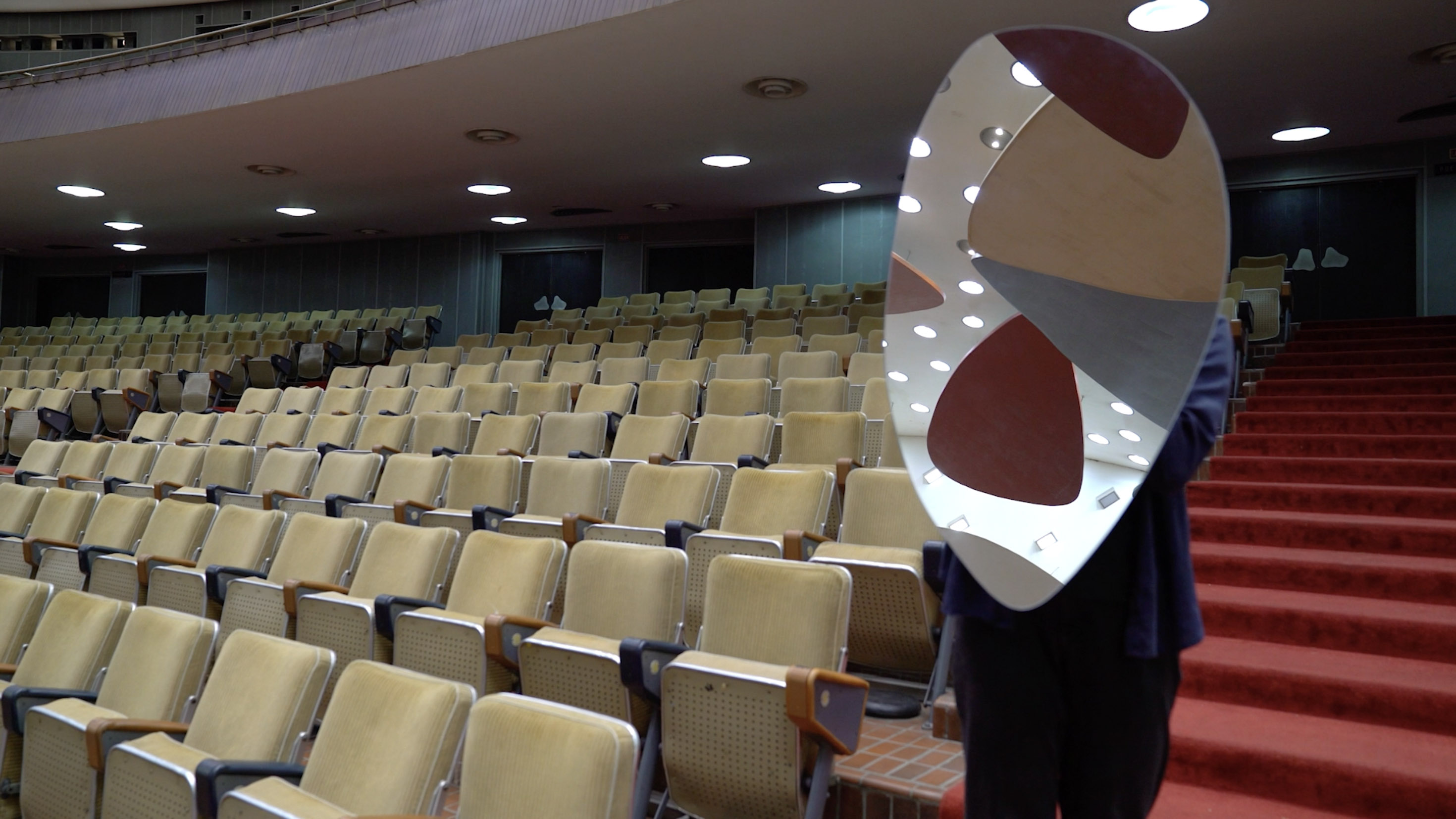
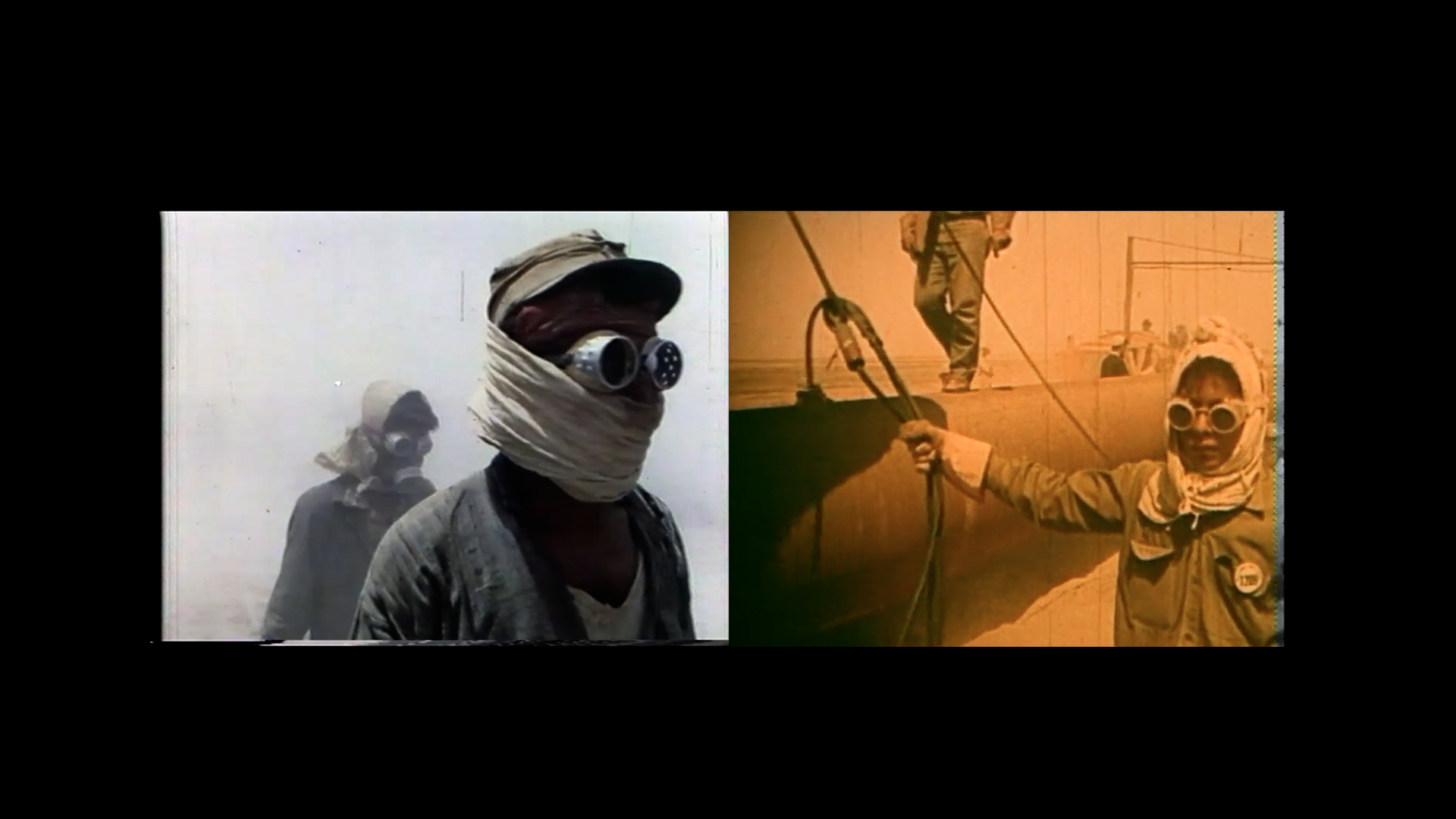
S • As I was working on One Image, Two Acts (2020) and Scenes of Extraction (2023)—the two episodes of the trilogy—I developed a parallel project of collecting anticolonial magazines, periodicals, newsreels and stamps around oil, labor and cultural networks of Third World solitary and cross-continental friendships. It partly became a habit, and it was partly a necessity to collect these materials because there was no library, museum, or special collection that I could visit to study them. This process was slow and chanceful. Some archives were stumbled upon in flea markets in Tehran, some at a bookshop in Tripoli, Lebanon, and some in an antique market in Cairo. Many of them were found on eBay, (and the Iranian version of e-Bay), and were mailed from a scattered map of geographical nodes across multiple continents over the years.
It was very hard to work with the materials, find a thread, an opening, or a narrative window. This is where the idea for writing the film came from and how it was developed by conversations around the archives. I could not position myself as a solo voice in the film, because the archives were geographically, linguistically, and geographically so diverse. That’s why I chose to build the film’s script as a series of conversations, rather than a monologue, with my voiceover threaded in between. The script ultimately took shape through interwoven dialogues with researchers, filmmakers and former members of the concert choir from the Central University of Venezuela. The story of transnational friendship was woven from these exchanges—a tapestry of their voices, my archival fragments, and the choir’s lingering echo.
H • For artists, emerging or otherwise, who are interested in working with archives as part of their own practice, what is your advice for them?
S • I think it is important to always question the trendiness of working with archives, how it has had many "turns" from the interventions of subaltern studies group in late 80s, to Derrida’s Archive Fever, and the turn to the archives in the early-mid 2000s in contemporary art (with Okwui Enwezor's curation of Documenta 11 in particular and the emphasis on the archive) and also the proliferation of archival artist films. It is important to address the whys and the hows behind each “archival turn.” One should always engage with the political configurations of the archive as an epistemic extension–national, colonial or otherwise.
Also, it really is important to distinguish what kind of archives you are working with? Each has its own visual-discursive structure. Is it a family archive? Found footage? Discarded? Institutional? National? Museological? Private collection? Is it a monument? A public site? A body? There are so many ways that we can unpack what an archive could be, before jumping in to prescribe how to work with them. It is about building relationships, and developing a language to converse with and through them. There is no manual for working with archives in my opinion.
H • How did you make decisions in regards to which events you foregrounded that speak to Palestine and how oil can be used as a solidarity tool and tactic (an immense topic of its own, I realize)? You share protest footage demanding that Arab oil be used towards Palestinian liberation; you discuss the fact that Libya and Algeria were seen as radicals within OPEC for their support of Palestine, and one of your interviewees discusses the 1967 Arab-Israeli War, and the 1973 Oil Embargo that oil producing Arab nations organized against Israel and the United States. However, the 1975 hostage crisis that took place at OPEC’s headquarters by a group that called for the liberation of Palestine wasn’t mentioned, for example.
S • The footage that you mention is from a protest held in Beirut in support of the nationalization of oil in Iraq, that took place in June 1972. It is very important footage for the film, and from the beginning, well before the film took shape, coming across it, transcribing the banners and reading what political slogans were circulating and how engaged the public was with the issues related to oil, became a central part of the film. Furthermore, I also knew from the beginning that because of the different oil embargos against Israel and its Western allies, regardless of their success or failures, OPEC was always implicated in the question Palestine in this film. Of course, there is a clear direction in the film, and not everything can be included. The film’s title even implies. I am very intrigued to see what in every conversation is brought up by different readers of the film; what events they think should have been part of this timeline. In the case of the 1975 hostage crisis, it really was not within the scope and the story of this film, because I could not actually dig into its nuances and actually do proper research. I did not want to stick to what is deemed as the truth.
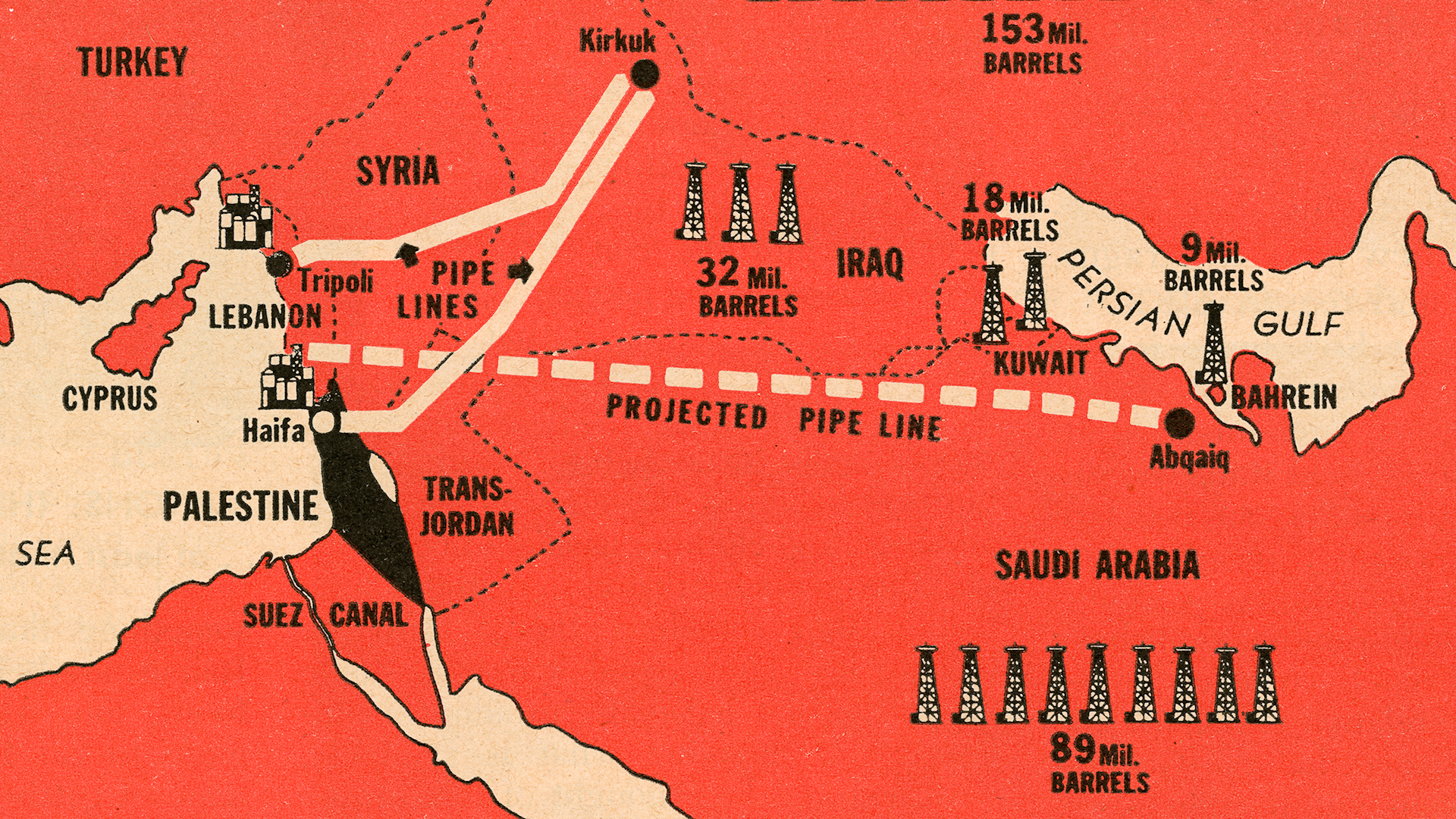
H • Throughout the film you often mention the re-drawing of borders. One of the curious and perhaps most puzzling aspects of Rhymes and Songs for OPEC is that it is made up of traditional folk music from various SWANA (Southwest Asian and North African) regions, forcing throughlines between these geo-specific communities. For example, the film opens with a track from the Rhymes and Songs choir, where they sing a 200 year old Saudi Arabian song (Oh Wanderer, Tell Me) that accompanies a traditional dance. These songs pre-date any modern and present enforcement of borders and notions of nation states; the fight for control over oil production, capital and land continues to justify violent wars and settler-colonial occupation. In many ways, the album represents the opposite of its diplomatic intentions—the inherent discord in using oil as a nation to nation, or community to community, building tool. Can you talk about your research in regards to this and to the songs selected for the album?
S • We are looking at borders of political alliances that no longer exist such as the United Arab Republic. We are looking at different iterations of Pan-Arabist maps and illustrations. Working with the archives over the years, I started to notice what seemed to be an iteration or a repetition of how borders joined and separated. In the film, the concept was to examine the variations on these maps, and I consider a map not solely as a requirement for a nation-state's territorial borders. An architecture could also be read as a map. The film encourages us to expand our imagination of a map.
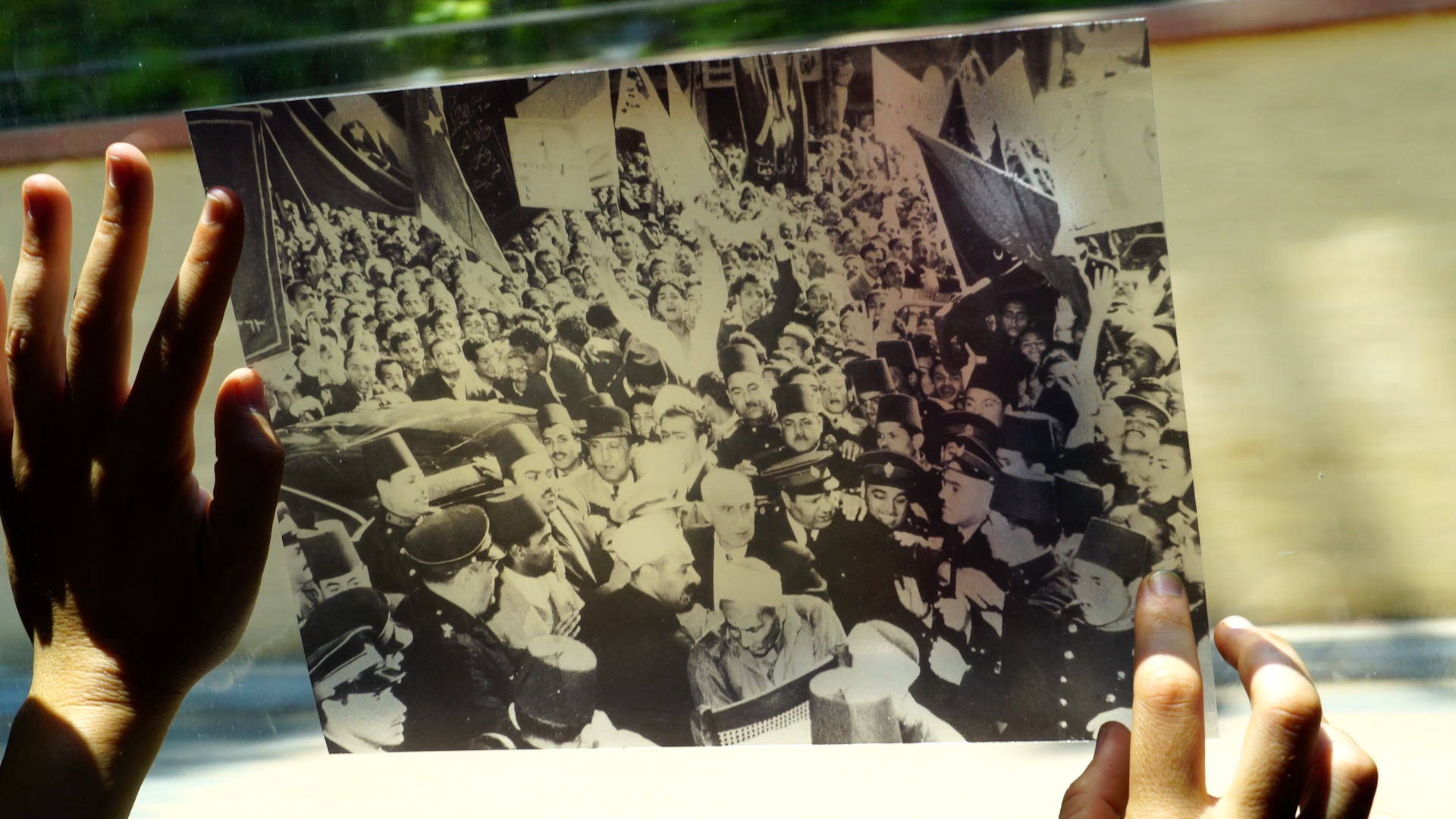
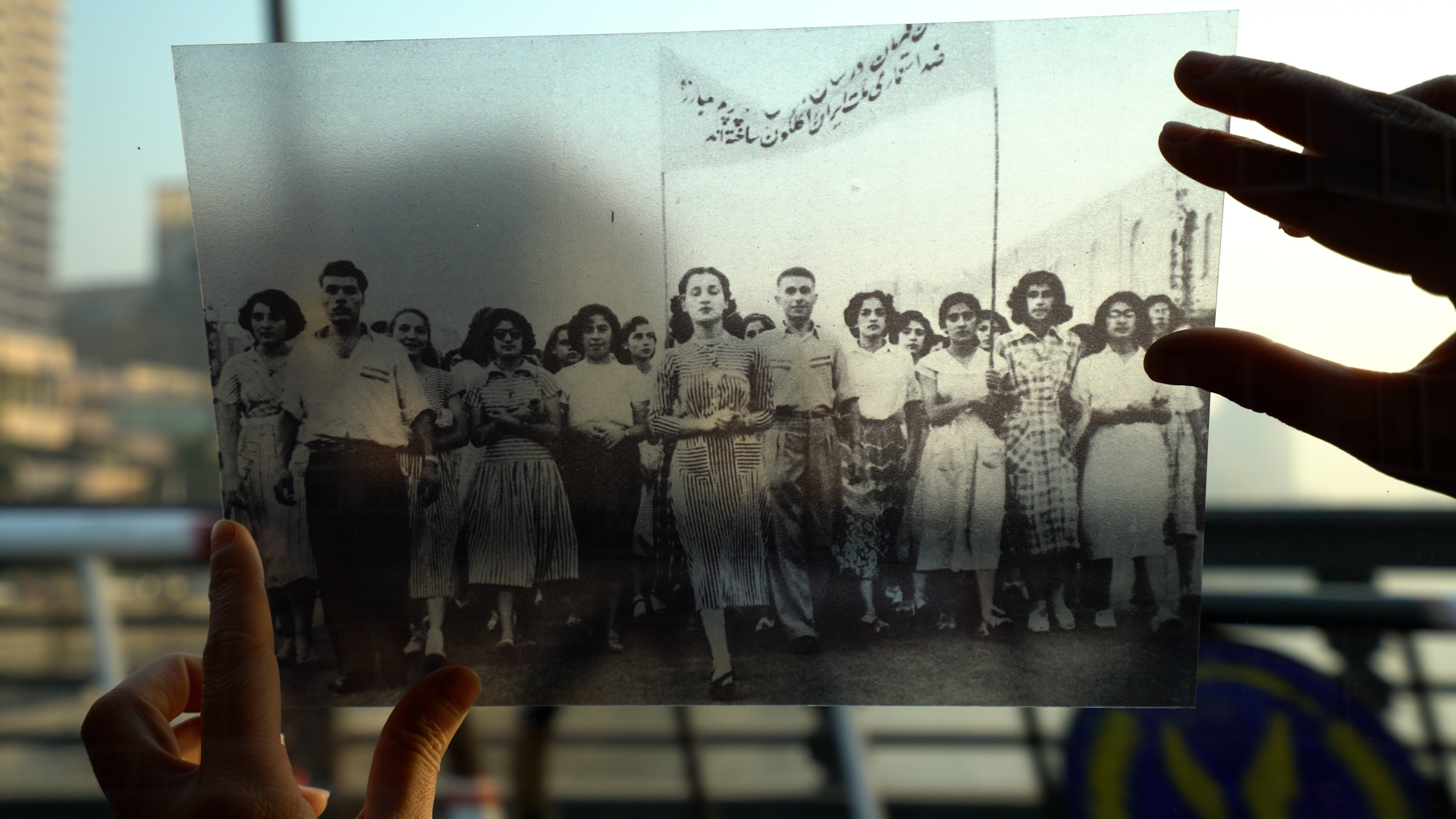
H • You hold semi-transparent archival photographs against a car window as it drives through a city scape. Both are photographs of crowds, one is of protest marchers. One of my readings of this was a literal merging and recirculating of past events with the present. Can you talk about this gesture?
S • My intention with filming in Cairo was very niche. I wanted to see how I can glean and collect traces from Mossadegh’s visit to Cairo in 1951. I soon realized, it is extremely difficult to tell this story by simply filming the cityscape. It is very hard to capture a city—it often results in flattening it as an image. I feel that certain documentary narrative genres assume that pointing a camera at a city can reveal something inherently hidden. Hence, we decided to actually do something quite simple. Print the photos as transparency prints and drive around in the city in the car, while trying to see how these images can gesture toward what this city holds in its underbelly. The photos are from Mossadegh’s visit to Cairo in 1951, and a demonstration in Tehran that was covered in Al-Musavar magazine. In both instances, the photos were anchored both in Cairo, while still connected to Tehran.
H • I would love to explore your relationship to the essay film. The trilogy that An Incomplete Calendar completes, is a series of essay films, with Calendar being your first feature length film. Your practice is rooted in a research methodology, and your work is exhibited in white cube galleries and screened in various film festivals around the world. How do you navigate these varying display contexts? you say that you’ve honed in on the essay film as the best container for the concepts and materials you investigate and bring together?
S • I was trained in photography and visual cultural studies, but I was also very connected to cinema and deeply inspired by the Iranian New Wave. I try to connect these often-separate worlds together and it takes time to make bridges. In 2020, I wrote a text titled “Essay as form, Image as Method.” It was an exercise in connecting how I see my creative process of writing about images, and making films with them. Essay films and the way I use language is always somewhere between delivery and failure for me. I am drawn to this. Similarly with the images: I am drawn to how much I rely on the world of images, and yet, more and more I need to expand them into other dimensions, whether it is through other elements in the film such as sound, narration, and duration. Essay film lends itself well to how we can question the medium and make the process available to the viewer.
H • What are you working on next?
S • I am working on three projects at the moment. One is turning An Incomplete Calendar into an artist book; two: a mid-length film about poetics and politics of “capturing” the sun for energy; and three: long-term research for my second feature film about the Iranian sociologist and anticolonial theorist, Ali Shariati, whose story connects Iran, to Algeria, and Lebanon between 1960-70.


